
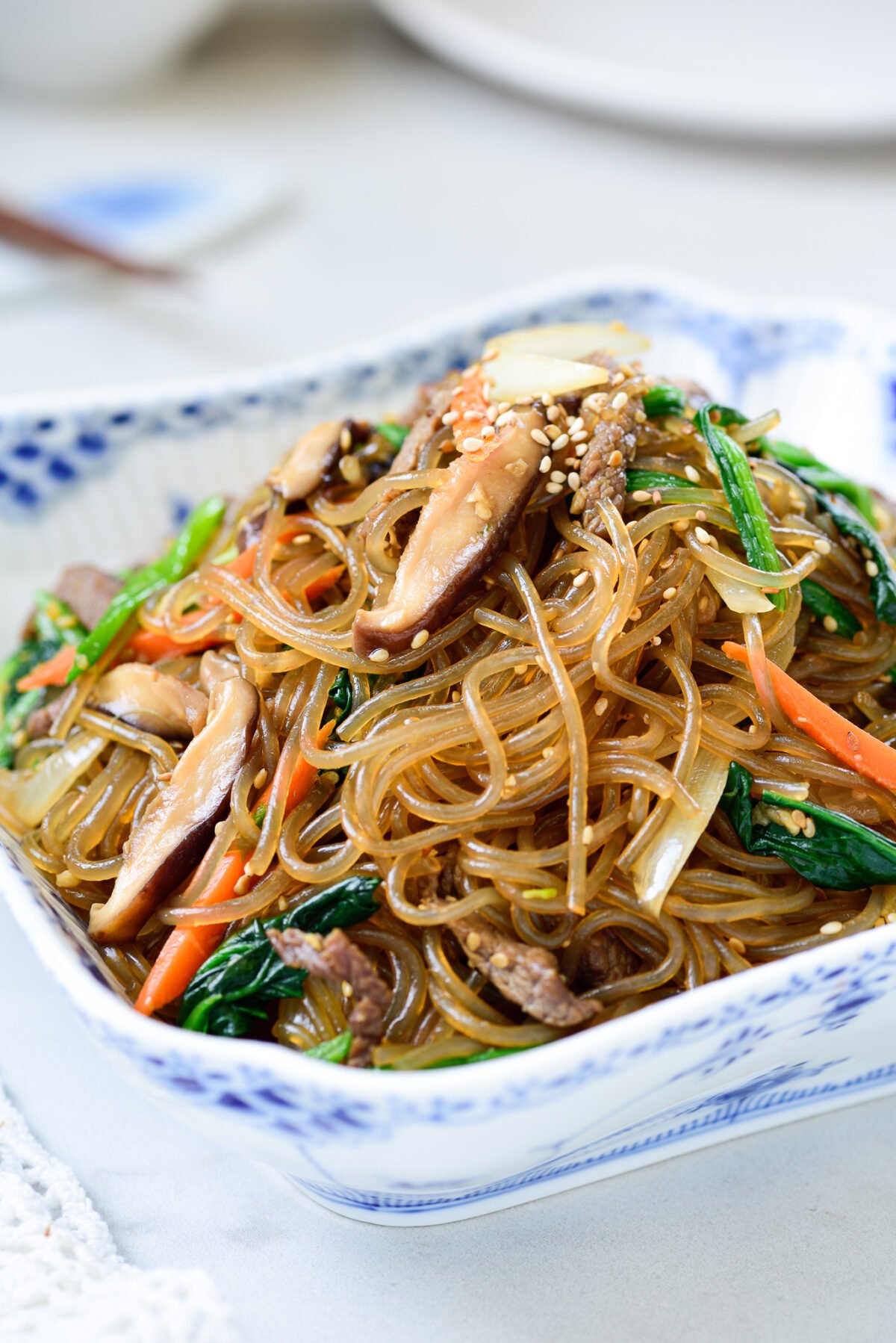
Whenever I crave something both comforting and vibrant, I turn to Japchae Stir-Fried Noodles. The interplay of silky sweet potato noodles, earthy mushrooms, and a glossy, savory-sweet glaze always brings me back to bustling Korean kitchens. Each ingredient plays a role in this colorful medley, and I find that even small tweaks can transform the dish. If you’ve ever wondered how to balance flavors and textures just right, let’s explore the secrets together.

Ingredients
Sure thing—let’s talk ingredients for Japchae, the classic Korean stir-fried noodle dish that’s sort of like a party in a bowl, if the party guests are veggies, beef, and chewy noodles.
Here’s what you’ll need:
- 150g Korean sweet potato starch noodles (dangmyun)
- 150g beef, sliced into thin strips (or skip it for a veggie version)
- 1 bunch spinach
- 1 medium-sized carrot, sliced into thin matchsticks
- 1 medium onion, thinly sliced
- 5 dried shiitake mushrooms
- 2 cups sliced white mushrooms
- 3 garlic cloves, minced
- 7–8 green onions, cut into 7 cm long pieces
- 4 tablespoons soy sauce, divided
- 4 tablespoons sesame oil, divided
- Olive oil (for sautéing, just a few drops here and there)
- 3 tablespoons sugar
- 1 teaspoon ground black pepper
- 1 tablespoon toasted sesame seeds
Now, here’s the thing about ingredients for Japchae: there’s a lot of flexibility. Got some bell peppers loitering in the fridge, looking for purpose? Toss them in. Hate mushrooms? No judgment—skip or swap them for something else, maybe zucchini. The beef is totally optional, by the way, so if you’re going meatless, no one’s going to show up at your door demanding answers. Just bump up the veggies, or even try tofu if you’re feeling wild and have the patience to keep it from sticking. The only real must-have here is the dangmyun noodles—those chewy, glassy noodles are the soul of the dish. And don’t cheap out on the sesame oil, either. It’s what gives Japchae its signature aroma. And if you’re like me and have a heavy hand with garlic, just… maybe don’t go full vampire-repellent mode, okay? Balance, as always, is key.
Steps
- Soak 5 dried shiitake mushrooms in warm water for a few hours. Squeeze out the liquid, then slice them thinly. Channel your inner ninja with the knife. Freeze drying can preserve mushrooms for long-term storage, which is useful if you make large batches to keep on hand for future meals like japchae long-term preservation.
- Boil 150g of Korean sweet potato starch noodles (dangmyun) in a big pot for about 3 minutes. Not 5. Not 25. Three. Drain, toss in a bowl, and snip with scissors a few times. Wild, but it works.
- Add 1 tablespoon soy sauce and 1 tablespoon sesame oil to the noodles. Mix with gusto. Set aside and try not to eat them all right now.
- In the same pot of hot water (reduce, reuse, recycle, right?), blanch 1 bunch spinach for 1 minute. No more, no less. Rinse under cold water three times. Why three? Who knows. Squeeze gently, cut into 5cm pieces, then mix with ½ tablespoon soy sauce and ½ tablespoon sesame oil. Into the big bowl it goes.
- Heat a pan, add a splash of olive oil, then stir-fry 1 medium carrot (matchsticks) for 30 seconds. Just until they look bright and slightly soft. Not mushy. Add to the main bowl.
- Repeat the olive oil maneuver, then stir-fry 1 medium onion (sliced thin) until translucent. Into the bowl. The onion parade continues.
- Another round of olive oil, then toss in 2 cups sliced white mushrooms. Quick stir. When they shrink a bit, into the bowl they march.
- Add a bit more olive oil, then toss in 7–8 green onions (cut into 7cm pieces). Stir for about a minute. You know where they’re going—yep, the bowl.
- Beef time. If you’re using it, a few drops of olive oil, then 150g beef strips and those sliced shiitakes from step one. Sauté until the beef is cooked. Add 3 minced garlic cloves, ½ tablespoon soy sauce, and ½ tablespoon sugar. Stir 30 seconds more, then—say it with me—into the bowl.
- Now the magic: Dump 2 tablespoons soy sauce, 3 tablespoons sugar, 2 tablespoons sesame oil, and 1 teaspoon black pepper into your big bowl of everything. Mix, mix, and mix some more. Use your hands if you want to feel like a true japchae master (or just a person with sticky fingers).
- Sprinkle 1 tablespoon toasted sesame seeds across the top. Stand back and admire. Then eat. Maybe share. Maybe not.
Did you forget anything? Check your fridge. If a veggie is giving you sad eyes, slice it up and toss it in. Japchae is forgiving, unlike your last math test.
For effortless blending of sauces or purees when prepping ingredients, consider high-performance blender options that are built for serious kitchens.
Also consider keeping a handy waffle maker iron nearby in your kitchen for other quick-cook tasks and compact appliance versatility.
Cooking Tips
You’ve got your japchae assembled and glistening, but a few smart tweaks can take it from good to unforgettable. I always toss the noodles with a splash of sesame oil while still warm—this keeps japchae (korean stir fried noodles) silky, never sticky. Don’t skimp on freshly ground pepper and toasted sesame seeds; their aroma elevates every bite. Taste as you mix—balance is key. For a heartier meal, consider adding a spoonful of ground chuck or another cooked ground meat to boost richness and protein. For a quick, rustic weeknight option, you can serve japchae alongside a simple pan-browned chicken finished with tomatoes and capers to complement the noodles.
Final Thoughts
How often does a single dish capture both comfort and celebration the way japchae does? Each silky strand of noodle, glossy with sesame oil, reminds me that food can unite tradition and creativity. I encourage you to savor the textures, from tender beef to vibrant vegetables, and let japchae be your canvas. With every bite, you’re tasting a piece of Korean heritage and sharing in its joy.